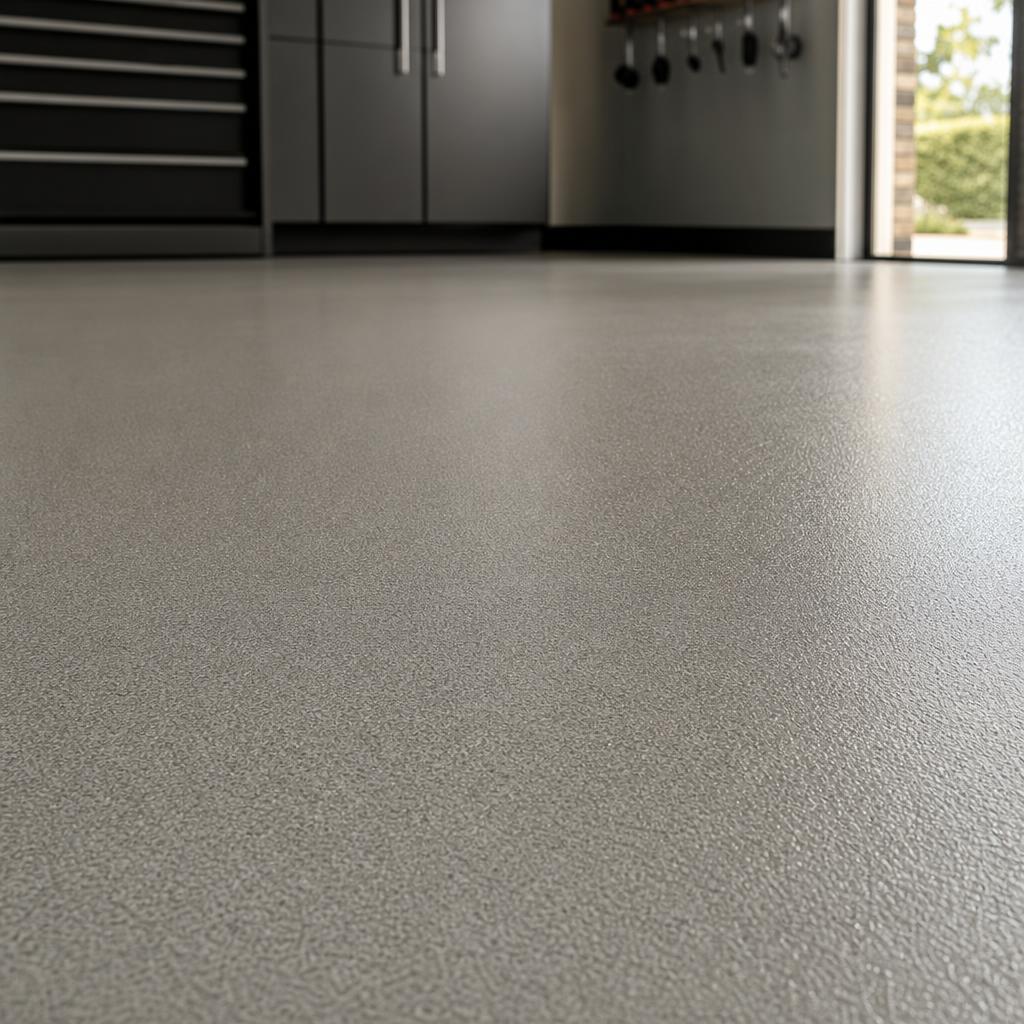
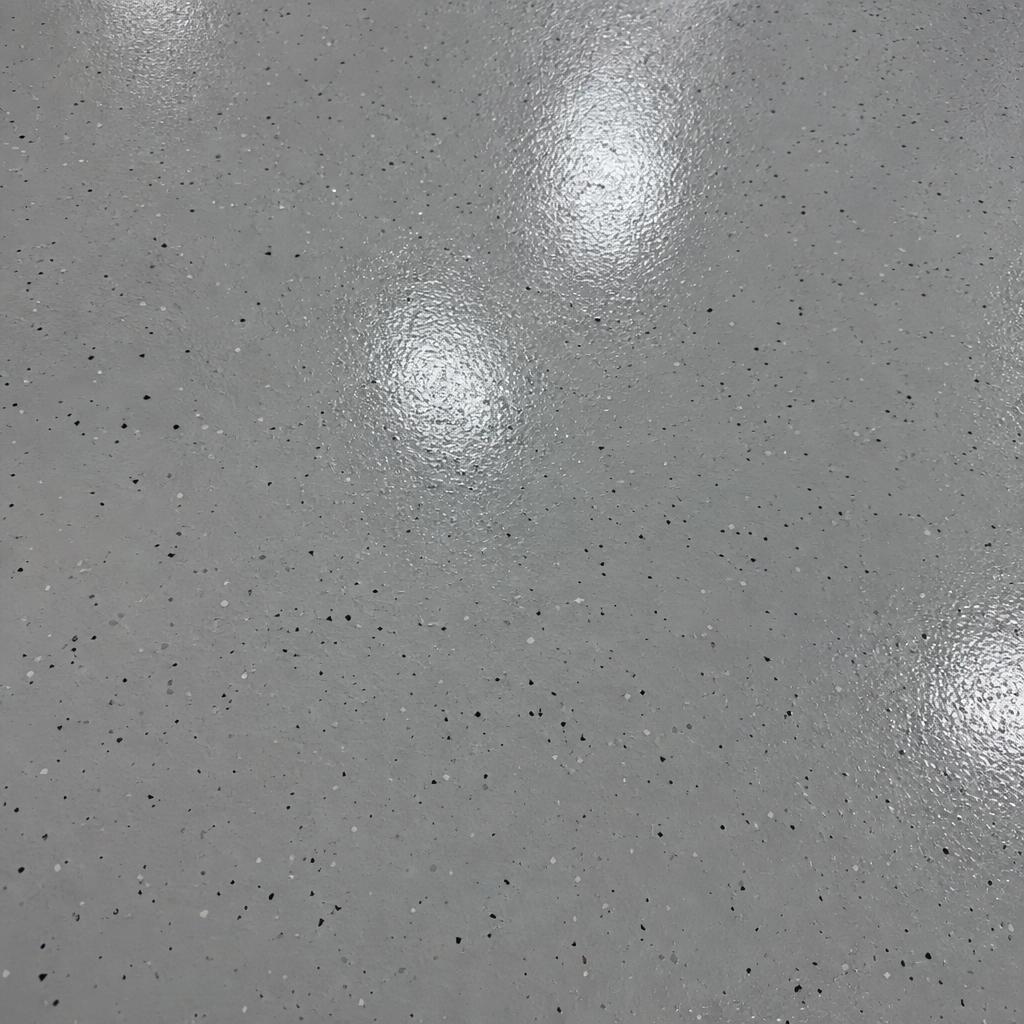
What is a polyaspartic floor coating, and why does it hold up here on the Gulf Coast?+
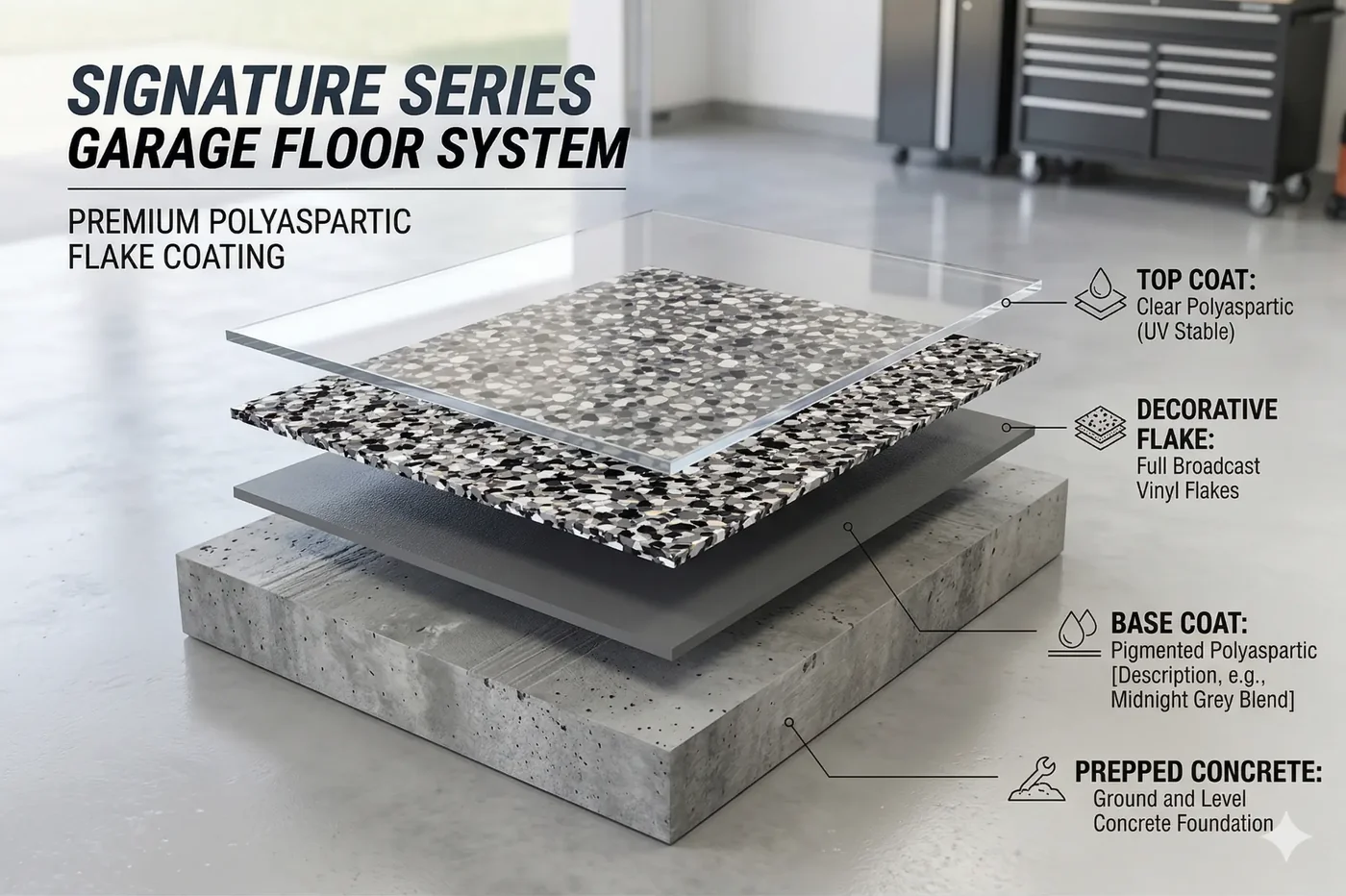
Polyaspartic is a fast-cure aliphatic resin, basically a next-generation cousin of polyurethane. It is 100% UV stable, so it does not amber or chalk in Panhandle sun the way old-school epoxy does, and it stays flexible enough to ride out slab movement from our humid/dry cycles. That is why every one of our system floors gets a polyaspartic clear coat on top.
Polyaspartic vs epoxy, which one should I actually pick for a Pensacola garage?+
Epoxy is the cheapest resin and fine for a covered workshop, but it yellows in sunlight, cures slow, and can hot-tire pickup in July heat. A polyurea base with a polyaspartic topcoat costs more up front, installs in one day, and holds color for the life of the slab. For an attached garage in Pensacola, Milton, or Gulf Breeze, the polyaspartic system is the one we recommend nine times out of ten.
How much does epoxy garage floor coating cost in Northwest Florida?+
Standard epoxy starts around $3 per square foot installed. A full polyurea/polyaspartic flake system starts around $7 per square foot. A typical two-car Pensacola garage (about 400 to 500 square feet) lands between $1,400 and $3,500 depending on the system and slab condition. We give an exact number on-site, no phone quotes with fake sticker shock.
Can you really install a garage floor coating in one day?+
Yes. Our full polyurea/polyaspartic flake system goes down in a single day: grind, base coat, flake broadcast, and clear coat. You walk on it in 24 hours and park on it in 48. That is the standard one-day install for most residential garages in Escambia, Santa Rosa, and Okaloosa counties.
Will it survive Florida humidity during install?+
Polyurea and polyaspartic install cleanly from about 40°F to 110°F and are far less moisture sensitive than epoxy. We still moisture-test every slab before we start and schedule around heavy rain days. Humidity is the exact reason we do not use plain epoxy on Gulf Coast garages.
What about hot tire pickup? My last epoxy floor peeled off in patches.+
Hot tire pickup happens when a coating stays soft or was rolled over a poorly prepped slab. Our polyurea base mechanically locks into a diamond-ground concrete profile and cures rock-hard, so a hot tire from a summer drive out to Navarre Beach cannot pull it up. If you have an old peeling epoxy floor, we grind it back and start clean.
Will the coating yellow in direct sunlight?+
The polyaspartic topcoat we use is aliphatic, which is the chemistry that resists UV. It will not amber, chalk, or yellow, even on a west-facing driveway apron or a screened lanai that catches afternoon sun. Standard epoxy will yellow, which is why we never use it as a topcoat.
Is the flake floor slippery when it gets wet?+
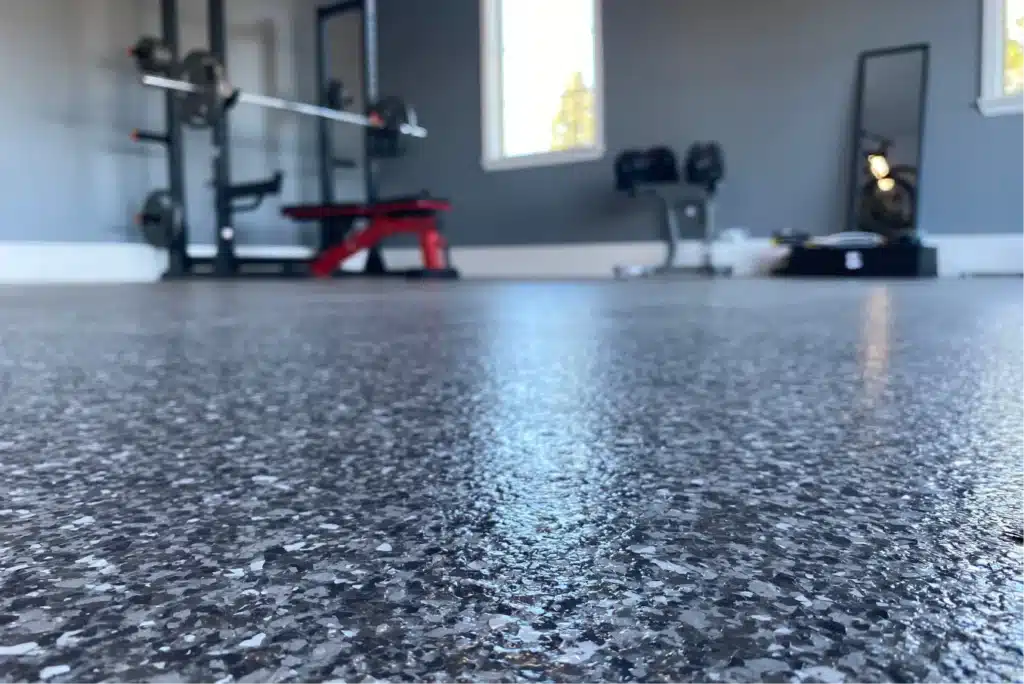
No. The vinyl flake broadcast creates a light orange-peel texture that gives you grip when the floor is wet from rain or a wash-down. If you want extra traction on a pool deck or lanai, we can add a fine aluminum-oxide anti-slip grit into the topcoat.
Can you coat a pool deck, lanai, or patio, not just a garage?+
Yes, and we do a lot of them across Navarre, Destin, and Perdido Key. Flake systems are great for pool decks because they stay cooler than dark pavers, resist salt and chlorine, and add slip resistance. Metallic epoxy and solid-color polyaspartic work well on covered lanais.
How long before I can walk on it, park on it, and put my toolbox back?+
Walk on it in 24 hours. Park a car on it in 48 hours. Set heavy tool chests, freezers, or gym equipment back after 72 hours to be safe. Full chemical cure is about 7 days, but you will not notice it during normal use.
Do you have to grind the concrete, or can you acid etch?+
We diamond-grind every floor to a CSP-2 or CSP-3 profile. Acid etching is a shortcut that most peeling coatings started with. Grinding opens up the pores of the slab so the polyurea can mechanically bond, which is the single biggest reason our floors do not fail.
What about cracks in my slab?+
Most Pensacola-area slabs have hairline cracks from heat cycles and settling. We chase them out with a diamond blade, fill with a structural polyurea crack filler, then grind flush before the base coat goes down. The flake layer hides the repair completely.
Can you go over an existing epoxy or painted garage floor?+
Almost always, but not by rolling over it. We grind the old coating off first, repair any spots where it delaminated the concrete underneath, then install the new system on clean slab. Coating over a failing floor just buys you a nicer-looking failure.
What happens if a hurricane pushes water into my garage?+
The coating is fully waterproof and seamless, so storm water does not soak into the slab or lift the finish. After the water recedes, you squeegee it out, rinse, and the floor looks the same. We have customers in Gulf Breeze and Pensacola Beach who dealt with Sally and Ian with no coating damage.
How do I clean and maintain the floor?+
Sweep or blow off dust weekly, rinse with a garden hose when it needs it, and damp mop with mild soap and water for anything sticky. Skip acid cleaners, degreasers with citrus solvents, and abrasive pads. That is the entire maintenance routine.
What kind of warranty do you offer?+
Every full polyurea/polyaspartic system carries our Limited Lifetime Warranty against peeling, delamination, and hot tire pickup for as long as you own the home. Standard epoxy carries a shorter warranty because the material itself does not last as long.
Do you offer financing or run any promotions?+
Yes. We finance qualified buyers through partner lenders with terms up to 120 months. We also run seasonal promotions and can work within just about anyone's budget, so it is worth a quick call to see what is running the week you are ready.
Do you do commercial floors, or just residential?+
Both. We coat warehouses, auto shops, restaurant kitchens, veterinary clinics, and retail spaces across Northwest Florida. Commercial jobs usually run on weekends or overnight so you do not lose business hours.
Do you do metallic epoxy floors?+
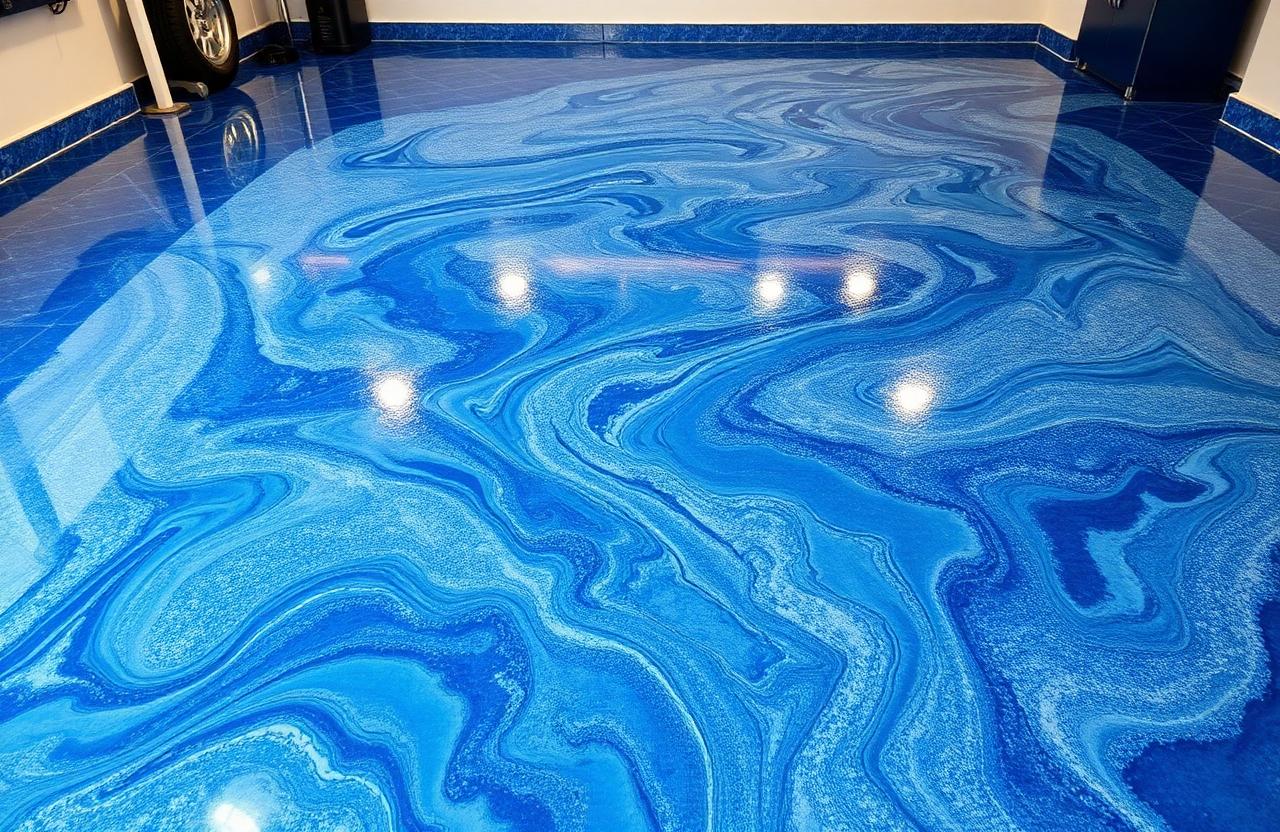
Yes. Metallic epoxy is our showroom finish: pearlescent pigments hand-worked into a 100% solids epoxy, then sealed under a UV-stable polyaspartic clear. Popular in Destin and 30A garages, basement bars, and salon floors. No two floors come out the same.
What areas of Northwest Florida do you serve?+
We cover all of the Panhandle, from Perdido Key and Pensacola through Milton, Pace, Gulf Breeze, Navarre, Fort Walton Beach, Destin, Niceville, Crestview, and out to Panama City Beach. If your zip starts with 325 or 324, we are your local coater.
How long does polyaspartic actually last in Florida?+
A properly installed polyurea/polyaspartic system is engineered for 15 to 20+ years in Gulf Coast conditions. Standard epoxy is more like 5 to 10 years before it needs a refresh. The finish tends to outlast the concrete underneath it.
What is the smallest and largest floor you will do?+
We coat anything from a 100 square foot laundry room up to 20,000+ square foot commercial floors. Most residential jobs land between 400 and 1,200 square feet.
How do I get an exact quote?+
Call us at (850) 600-0351 and we will get a free on-site quote scheduled, usually within a couple of days. On-site is the only way to give you a real number, since the price depends on slab condition, moisture, and the system you pick.